Why Ceramic Grinding Wheels Are the Hardest-Working Tool in Your Shop
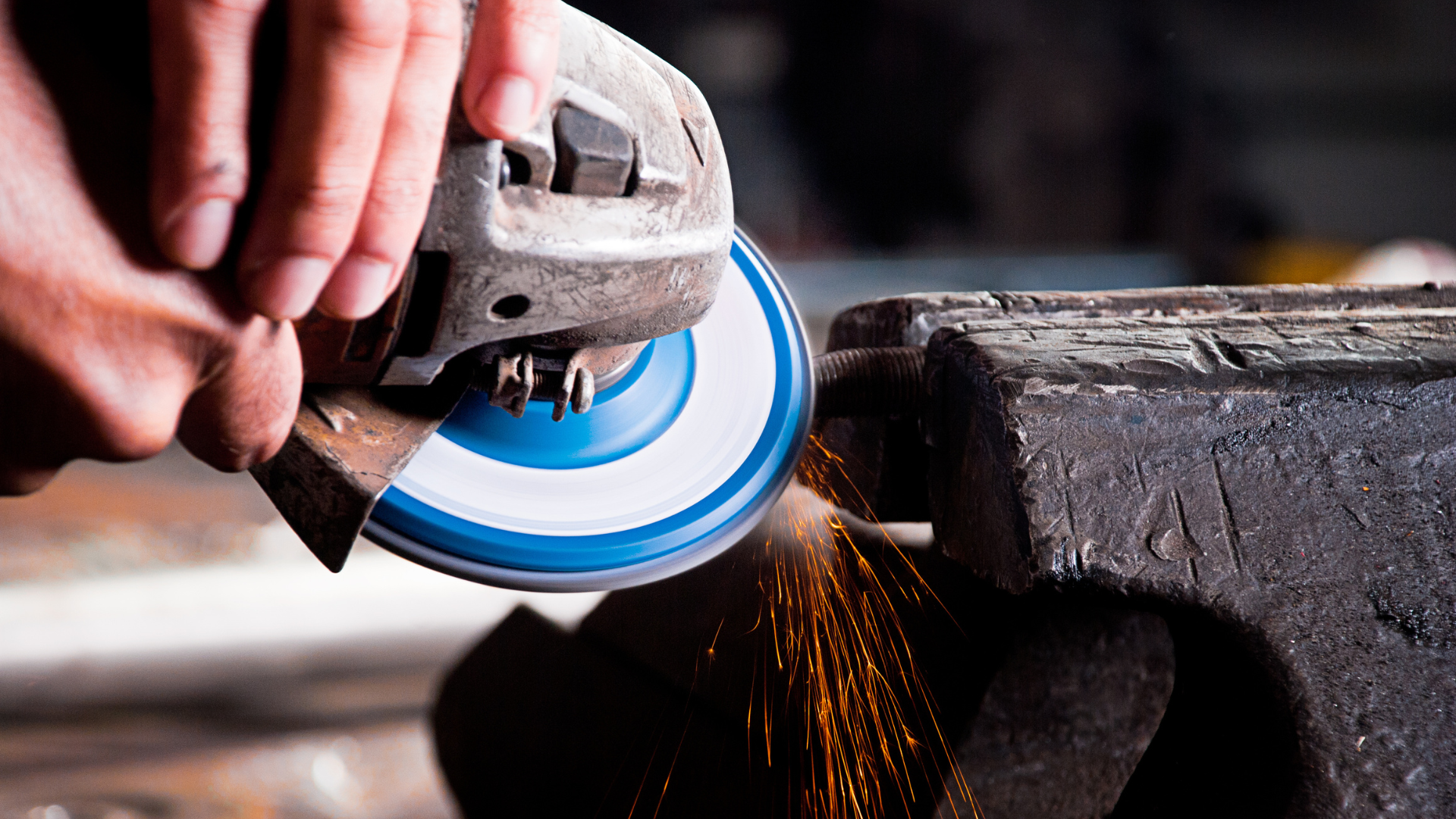
Let’s talk about the grinder sitting on your bench right now — caked in metal dust, probably running a wheel you grabbed off the shelf without thinking about it. That wheel might be costing you more than it’s saving you.
Here’s the thing about abrasives: not all grains are created equal. If you’re still reaching for standard aluminum oxide or conventional zirconia on tough jobs, you’re leaving performance and money on the table. Ceramic abrasive technology has come a long way.
Let’s break down what ceramic wheels actually do, why they work, and when you should be running them.
What Makes Ceramic Different
Ceramic abrasives are a man-made, engineered grain. They are purpose-built for performance. The grain structure is uniform and high-density, which determines how consistently a wheel cuts under load and how long it lasts.
Here’s the real advantage: ceramic is self-sharpening. Under heat and pressure, each grain fractures in a controlled way, exposing fresh cutting edges. Conventional abrasives do the opposite: they dull, generate heat, and start rubbing instead of cutting. That heat leads to glazing, burned parts, and lost time. Ceramic keeps cutting — cooler, faster, and longer.
The result is a material that outperforms on tough applications: stainless steel, high-nickel alloys, titanium, tool steels, and hard-facing overlays. If your crew regularly works with those kinds of materials, ceramic is the upgrade worth making.
The Performance Math You Can Actually Use
Switching to ceramic isn’t just about a better cut. It’s a cost-per-part calculation that often surprises people. A ceramic wheel costs more upfront, no question. But if one ceramic wheel outlasts three or four conventional ones on a demanding application, and you factor in the labor cost of wheel changes, the economics flip fast in ceramic’s favor.
There’s also the workpiece side of the equation. Cooler cutting means less heat stress on your material. For applications where heat-affected zones can compromise integrity and require rework, that’s not a small thing. It’s the difference between a part that passes inspection and one that doesn’t.
Efficiency, precision, durability — for a crew grinding high-value material day in and day out, those are the variables that determine whether you’re running lean or bleeding money.
The United Abrasives/SAIT Ceramic Lineup
Since 1970, United Abrasives/SAIT has been building products for people who actually work for a living — real shop floors, not lab conditions. Their ceramic lineup is built to match how shops actually work: different tools for different grinding demands.
- For flap discs, the options range from everyday performance to maximum demand: the Encore Ceramic Plus and Ovation® Ceramic Plus for the hardest applications, the Encore Ceramic and Ovation® Ceramic for strong all-around use, and the Trimback™ Ceramic for tight-access work where a low profile matters.
- The fiber disc series — including the 7S, 9S, 7-II, and the 9.3 Power Max Ceramic — covers everything from aggressive stock removal to controlled finishing, with the Power Max built for jobs where there’s no margin for a wheel that quits early.
- The ceramic offering rounds out with belts and paper discs, so whether you’re running a bench grinder, a stroke sander, or a portable setup, there’s a ceramic option for your process.
When to Reach for Ceramic
If you’re doing a quick cleanup on mild steel, save your money. But if you’re grinding materials that fight back — or running jobs where heat, finish, and uptime matter — ceramic isn’t the premium option. It’s the right tool.
The same logic applies to high-volume work where wheel changes add up. Every swap costs time. Fewer swaps mean more parts, more throughput, and a better bottom line. In manufacturing and precision fabrication environments, pushing harder and faster, ceramic has moved from nice-to-have to competitive necessity.
The Bottom Line
The right abrasive on the right application is one of the highest-leverage decisions a fabricator, welder, or machinist makes. It’s also one that often gets less thought than it deserves.
If you haven’t tested ceramic on your toughest applications recently, now’s the time. Run it side-by-side with what you’re using now and compare the results. The difference shows up fast — in cut rate, wheel life, and finished parts.
United Abrasives/SAIT has been delivering quality, reliability, and innovation since 1970. Explore the full ceramic product lineup at unitedabrasives.com.
Subscribe
Get product news and tips straight to your inbox