
What “Industrial-Grade” Really Means in Abrasive Manufacturing
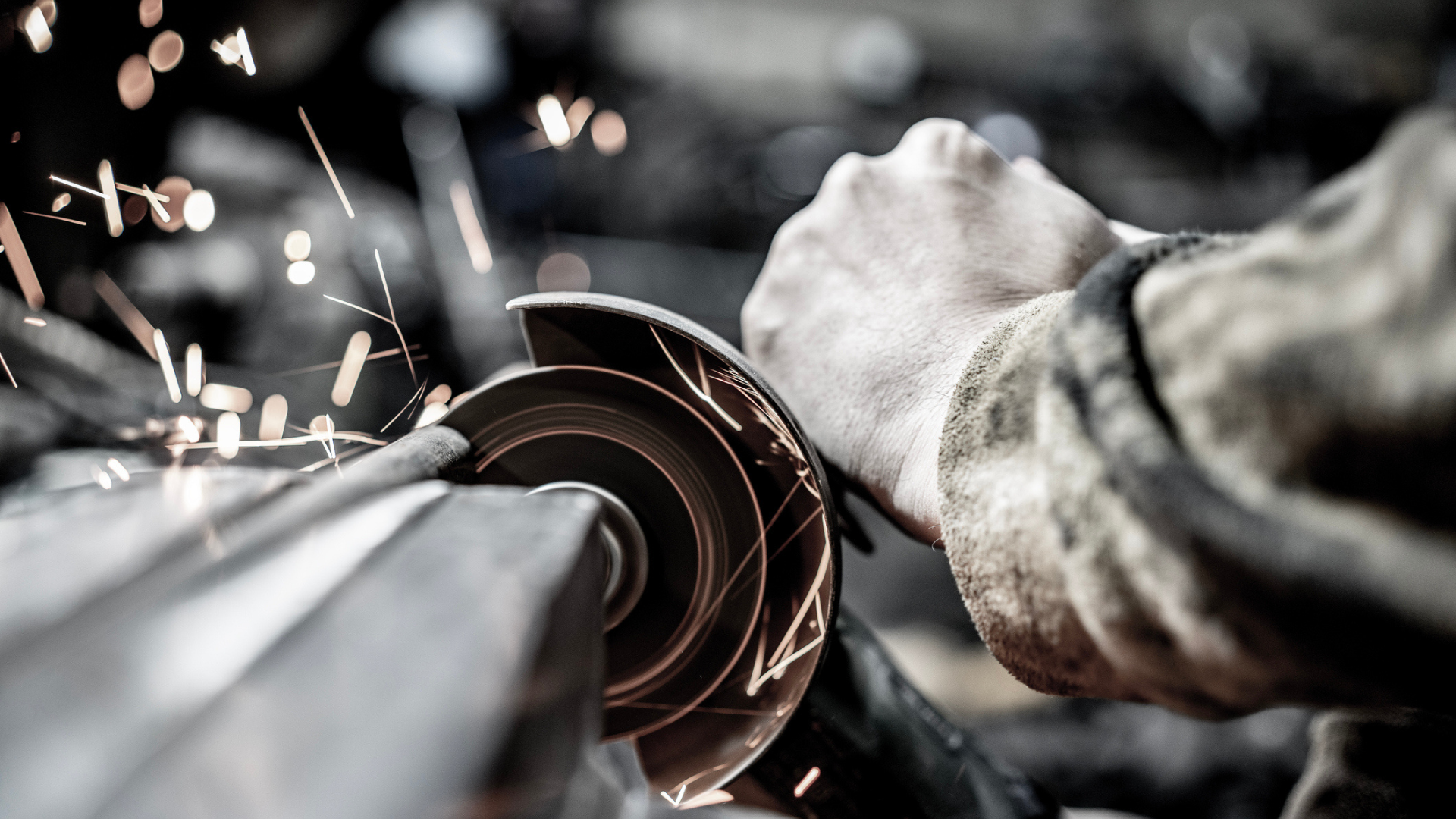
A cutting wheel fails halfway through a job. The replacement from the same box cuts differently — slower, hotter, rougher. By the third wheel, the operator knows something’s off, but the deadline hasn’t changed.
In fabrication shops, shipyards, and heavy construction sites, abrasives don’t get second chances. When an hour of downtime costs hundreds of dollars and safety is non-negotiable, consistency isn’t a luxury. It’s the baseline.
So what actually defines an industrial-grade abrasive?
It has less to do with how a product looks or what it costs and everything to do with how it’s engineered, manufactured, and controlled from raw material to finished wheel.
Industrial‑Grade Starts With Material Selection
True industrial‑grade abrasives begin with high‑quality raw materials chosen for performance, not convenience.
That includes:
- Consistent abrasive grain chemistry and sizing to ensure predictable cutting action
- Carefully selected bonding agents that balance strength, flexibility, and heat resistance
- Reinforcement materials engineered to withstand high speeds and heavy pressure
When grain chemistry varies, wheels can load up with metal particles, generate excessive heat, or cut unpredictably. When bonding agents are chosen for cost over performance, wheels may break down too quickly under pressure or, worse, become brittle and prone to failure.
As Carolyn Houlihan of United Abrasives puts it:
“When grain size varies from one production batch to another, you are basically changing the ‘teeth’ of the wheel without telling the operator. Small inconsistencies can lead to faster breakdown, rough finishes, increased glazing, or inconsistent wheel behavior.”
That’s not a minor detail. It’s the difference between a tool that feels right in your hands and one that keeps fighting you.
The wrong reinforcement material may fail under sustained, real-world stress. Cutting corners at this stage almost always shows up later as inconsistent cut rates, premature wear, or performance that feels just a little off from one wheel to the next.
Industrial-grade manufacturing prioritizes repeatability from the very first input.
Manufacturing Discipline, Not Just Assembly
Abrasives are engineered products, not simple consumables. Industrial‑grade manufacturing relies on controlled, repeatable processes — not shortcuts.
Key elements include:
- Precise formulation control so every batch matches performance specifications
- Tightly managed mixing and molding processes to ensure uniform structure
- Controlled curing and finishing conditions that directly impact strength and durability
Variations in curing temperature can compromise the bond structure, leading to wheels that wear unevenly or disintegrate prematurely.
And sometimes, the issue isn’t dramatic. It’s subtle.
“Moisture content in raw materials can greatly affect the performance of a wheel if it is not tightly controlled,” Houlihan warns.
Moisture control isn’t flashy. It doesn’t make the marketing brochure. But in manufacturing, small variables compound quickly. That’s why disciplined producers monitor environmental conditions, timing, and material handling with the same seriousness they apply to speed testing.
Industrial-grade production minimizes those variables through disciplined process control — not just at the beginning of the shift, but every batch, every run.
The Difference You Feel, Not Just See
Two cutting wheels can look identical on the shelf: same diameter, same thickness, same arbor hole. But one cuts clean and cool for 40 minutes, while the other bogs down and needs replacing in half the time.
The difference isn’t visible. It’s in the grain distribution, the bond formulation, the curing profile — details an operator will never see but will absolutely feel the moment the wheel touches metal.
Testing That Goes Beyond Minimum Requirements
Meeting published safety standards is a must, but industrial‑grade abrasives are often tested beyond the minimum.
Abrasive wheels are rated for specific maximum operating speeds based on size and application. Industrial‑grade manufacturers like United Abrasives often test well beyond those rated thresholds to ensure performance margins exist when operators push equipment hard or environmental conditions aren’t ideal.
That means:
- Speed and burst testing to validate structural integrity
- Performance testing under load to evaluate cut rate and wear
- Ongoing quality checks to verify consistency across production runs
Testing isn’t a one‑time event. It’s part of the manufacturing rhythm, not just a box to check. It’s a continuous feedback loop that ensures products perform the same way today as they did last month and last year.
Batch‑to‑Batch Consistency Is the Real Differentiator
One of the clearest signs of an industrial‑grade abrasive is consistency. Operators notice it immediately, even if they can’t always explain why.
Professionals depend on:
- Predictable cut speed
- Consistent wheel life
- Reliable feel and control
When an abrasive performs differently from one batch to the next, productivity suffers and safety risks increase. Industrial‑grade manufacturing focuses on eliminating surprises, so operators know exactly what to expect every time they open a box.
Why “Industrial‑Grade” Is More Than a Label
In a crowded abrasives market, it’s easy to put “industrial-grade” on a label. Building a product that actually delivers on that promise is a different matter entirely.
At United Abrasives, “industrial-grade” means choosing the harder path: rigorous material standards, disciplined process controls, and testing that goes beyond compliance. It means treating consistency as a core requirement, not a marketing claim.
Because when a fabricator reaches for a cutting wheel at 6 AM on a job site, or a shipbuilder is working against a delivery deadline, they shouldn’t have to wonder whether this wheel will perform like the last one.
Industrial-grade should mean something you can trust, every time.
Subscribe
Get product news and tips straight to your inbox