
The Operator Variable: Why Abrasive Performance Isn’t Just About the Wheel
(This is part two of our series on the gap between buyers and operators; read part one here.)
Put the same grinding wheel in the hands of two different operators, and you’ll get two different jobs: same box, same lot number, same grit. One guy finishes clean and fast. The other burns through it twice as quickly and swears the wheel is garbage. Both of them are right about what they experienced. Neither of them is telling you the whole story, because the wheel was never the only variable in that equation.
Most abrasive marketing wants you to believe performance lives entirely inside the product. Buy the right wheel, get the right result, every time. It’s a tidy pitch, and it’s also incomplete. Anyone who’s spent real time on a shop floor knows better.
The Variables Nobody Puts on the Spec Sheet
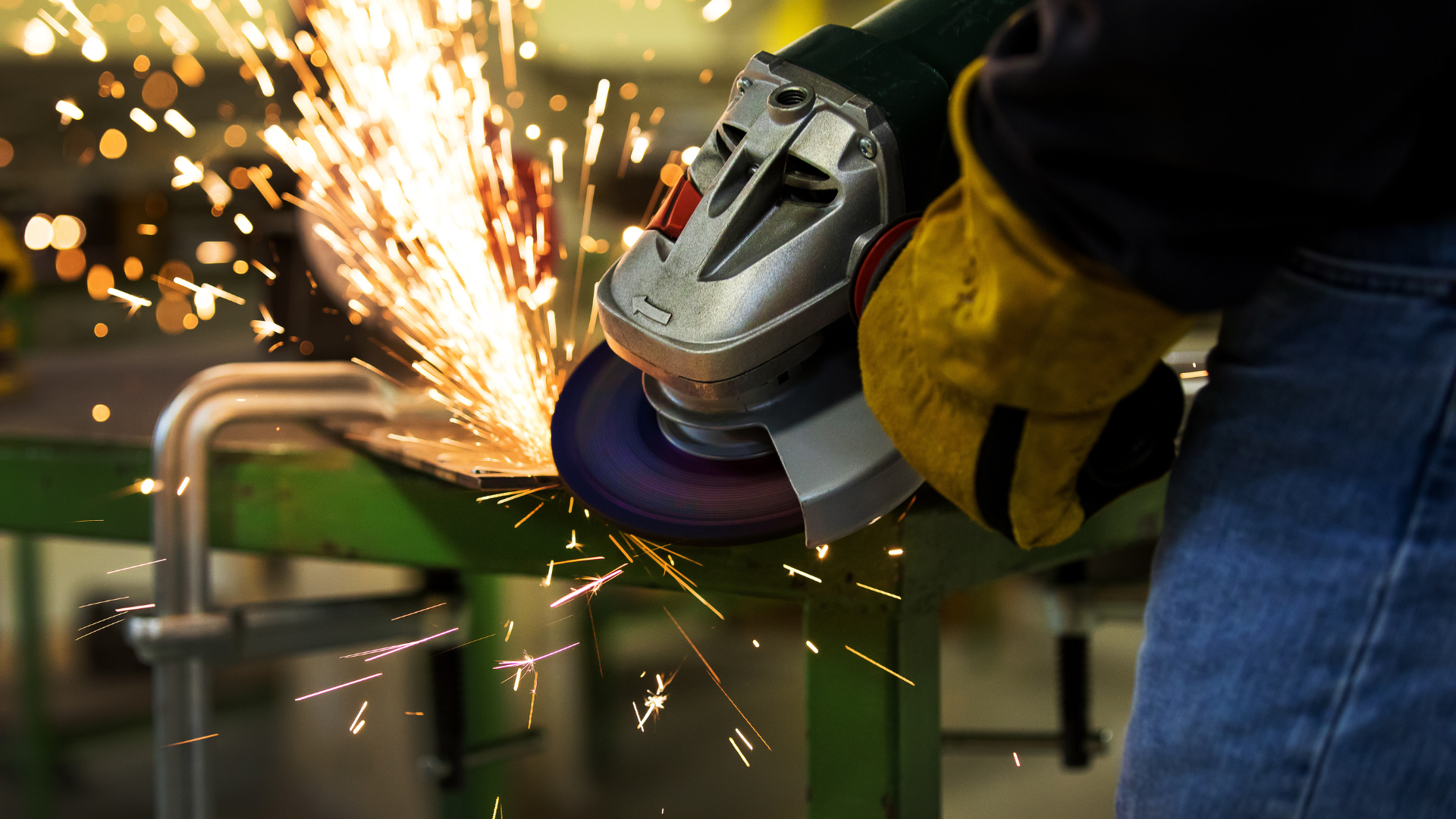
Pressure is the biggest variable. Too much downward force and you’re not cutting; you’re gouging, generating heat, and burning through grain faster than it was designed to wear. Too little and you’re gliding without ever engaging the material properly. Angle matters just as much. A few degrees off the ideal contact angle changes how the wheel loads, how it wears, and how much of the abrasive surface is actually doing work at any given moment.
Then there’s equipment condition. A grinder with worn bearings, an unbalanced wheel, or the wrong RPM for the application will beat up an abrasive that would otherwise perform fine. Technique compounds all of it. The operator who’s been doing this for fifteen years makes constant small corrections without thinking about it. Someone newer to the trade doesn’t have that muscle memory yet, and the wheel takes the blame for the learning curve.
None of this shows up on a data sheet, and most manufacturers never bring it up. It’s easier to sell a wheel as the whole answer than to explain that the wheel is one variable among several.
“There are several reasons a wheel can underperform, but it’s less often the wheel itself than people expect,” explains Dan Ledogar, Director of Regional Sales for United Abrasives.
“The most common mistake is the wheel being mismatched to the job, or how it’s being run. When a wheel isn’t performing, I’d say the majority of the time it comes back to one of these: too much pressure is being applied, the grind angle is off, or the grinder isn’t running at the rated RPM.”
He further explains that United Abrasives makes specific wheels for specific applications, so it’s important to make sure the wheel matches the job. To do that, he’ll ask three simple questions:
- Application — What are you trying to do? Grinding, cutting, blending, or finishing.
- Tool — What are you running it on? Right-angle grinder, die grinder, or gas-powered saw)
- Material — What are you working on? Carbon steel, stainless, aluminum.
“If those three line up and it’s still underperforming, that’s when I look at technique and the tool: Making sure they are letting the wheel do the work instead of leaning on it, keeping the right angle, and ensuring the grinder’s speed is correct,” Ledogar says.
“A very common mistake I see in the field is aluminum fabricators using general-purpose cutting and grinding wheels and struggling to complete their work efficiently. Our A46N Aluminum grinding or cutting wheel solves the problem every time.”
Why That Honesty Actually Matters
Here’s the part that surprises people: acknowledging all these uncontrollable variables doesn’t weaken the case for good abrasives. It strengthens it. If pressure, angle, equipment, and technique are all in play and none of them are fully within anyone’s control on a given day, then the one thing that can be controlled is the consistency of the product itself.
A wheel that performs the same way, batch after batch, gives a shop a fixed point to work from. When something goes wrong, a consistent product lets you actually diagnose the problem, because you can rule the abrasive in or out. Swap in a wheel that varies lot to lot, and now you’re troubleshooting technique, equipment, and product quality all at once with no way to isolate which one is failing you.
“At United Abrasives, we have invested heavily in state-of-the-art automation equipment to produce the most consistent, highest-quality product. We also have an extensive Quality Control and testing process to ensure we offer the safest wheels on the market,” says Ledogar.
What This Means on Your Floor
None of the uncontrollable stuff is actually a lost cause. Equipment maintenance schedules catch worn bearings before they wreck a wheel. Training time spent on pressure and angle pays off across every job a new hire touches. Standardizing technique across a crew reduces the variation between your best operator and your newest one.
But the abrasive itself is the one variable you can lock down completely, just by choosing a manufacturer that treats consistency as non-negotiable. That’s not a small thing. It’s the difference between a shop that can troubleshoot its way to better results and one that’s guessing every time a job goes sideways.
The Bottom Line
Abrasive performance has never been just about the wheel, and any brand that tells you otherwise is selling a fantasy. Pressure, angle, equipment condition, and technique all play a role, and most of them are outside anyone’s direct control on any given day. That’s exactly why the abrasive itself needs to be the variable you never have to worry about.
United Abrasives/SAIT has spent over fifty years building products around how abrasives actually get used on real shop floors, not in ideal lab conditions. Consistency, batch after batch, is the whole point. Explore the full product lineup at unitedabrasives.com.
Subscribe
Get product news and tips straight to your inbox