
Why the Cheapest Grinding Wheel Is Often the Most Expensive One
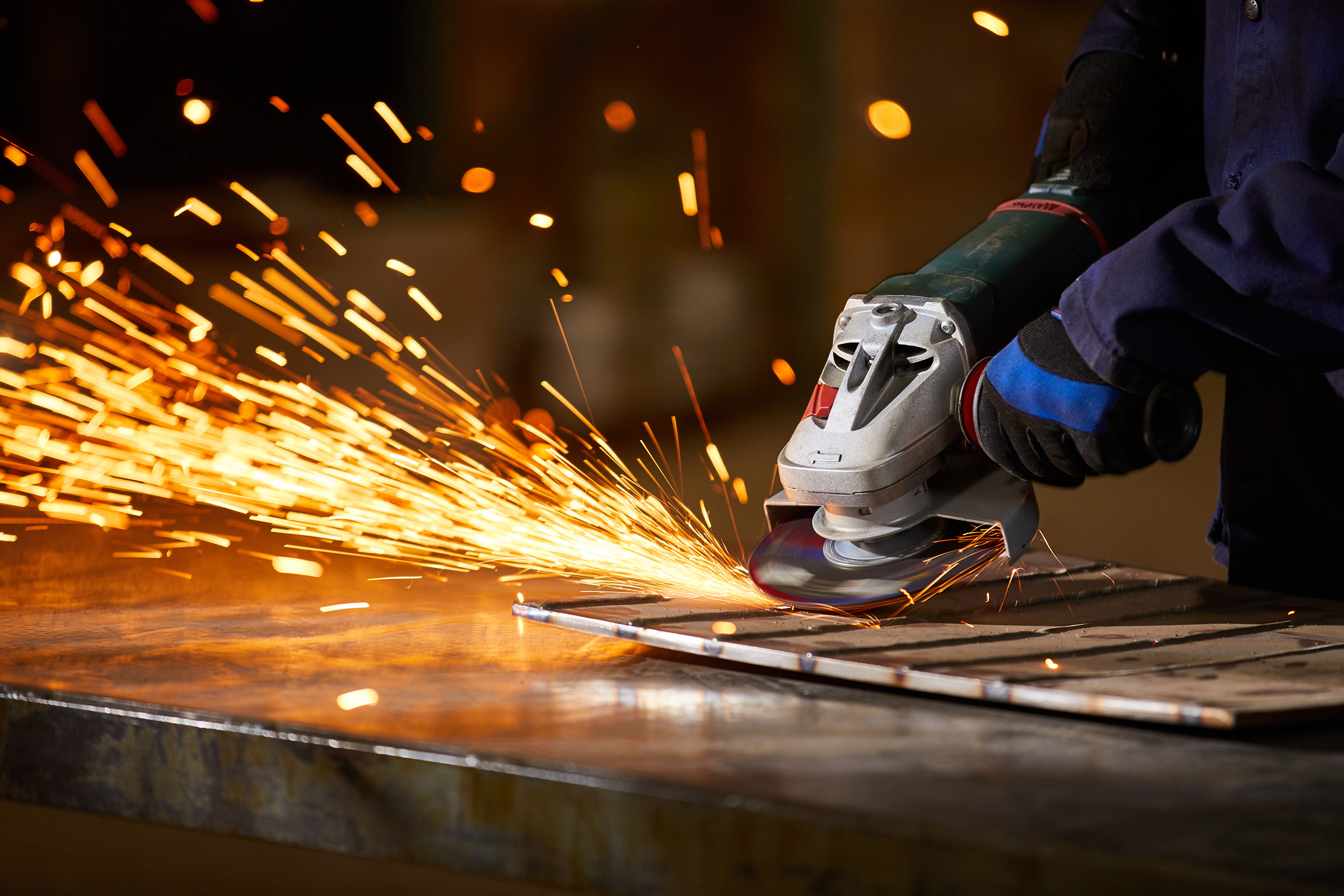
There’s a line item on almost every shop’s consumables order that nobody thinks twice about: grinding wheels. They’re often bought in bulk, grabbed off the shelf, and treated like a commodity. Price drives the decision. It shouldn’t.
Here’s the problem with buying on price: the cost of a grinding wheel has almost nothing to do with what that wheel actually costs you.
The math most shops never do
When a buyer compares two grinding wheels — one half the price of the other — the cheaper one looks like the obvious call. Multiply that across a bulk order, and the savings look real. But that calculation only measures what you paid at the point of purchase. It doesn’t measure what happened after the wheel hit the grinder.
A cheaper wheel that wears out in 20 minutes versus a quality wheel that runs for 45 means your operator is stopping to change wheels more than twice as often. That’s not a minor inconvenience. Every wheel change costs time — finding a replacement, shutting down, swapping it out, getting back up to speed. In a busy fabrication environment, those stops add up to real labor hours over the course of a shift. And those are hours you’re paying for, whether parts are coming off that grinder or not.
Run the numbers on a full day of production, and the price difference between wheels starts looking a lot smaller. Run them across a week, and it can flip entirely.
Heat is where cheap wheels really cost you
Wheel life and swap frequency are the visible costs. Heat damage, known as glazing, is the one that hurts the worst.
When a grinding wheel glazes and stops cutting efficiently, it shifts from material removal to friction generation. Heat builds up in the workpiece, and on anything other than mild steel — stainless, high-nickel alloys, tool steel — that heat stress matters. It can compromise the metallurgical integrity of the material, alter surface hardness, or create heat-affected zones that show up as discoloration, warping, or worse.
“Glazing can be a significant challenge for fabricators. Not only does a glazed wheel result in longer cycle times, increased heat generation, and poor surface finish, but it also leads to premature wheel changes. In many cases, wheels are discarded with up to half of their usable life remaining. The result is increased consumable costs, reduced production throughput, and lower overall profitability,” explains Dan Ledogar, Director of Regional Sales for United Abrasives.
On a standard part, that might mean extra finishing work. On a precision component or a high-value workpiece, it can mean a failed inspection and a scrapped part. The cost of one scrapped part on a tight-tolerance job can dwarf the savings from an entire pallet of budget wheels.
This is the cost that never shows up on the purchase order but absolutely shows up on the shop floor.
Rework is a budget killer hiding in plain sight
Failed inspections don’t just cost you the part. They cost you the labor that went into it, the machine time, and the schedule impact of having to run it again. In shops working to tight deadlines or thin margins, rework isn’t an inconvenience; it’s a direct hit to profitability.
The connection between abrasive quality and rework rate is one that experienced operators understand immediately, and purchasing departments rarely see. The buyer sees a $3 savings per wheel. The operator sees a part that needs to go back through the process. Those two people are rarely in the same conversation.
Closing that gap starts with asking a different question at the point of purchase: not “what does this wheel cost?” but “what does this wheel cost me per finished part?”
Cost-per-part is the right unit of measure
Cost-per-part accounts for everything the price tag doesn’t: wheel life, change frequency, heat generation, surface quality, and the downstream impact on the parts coming off your equipment. It’s the calculation that actually reflects what an abrasive is costing your operation.
When you run that math, quality abrasives don’t look like a premium. They look like the smart, efficient choice. Fewer stops, fewer swaps, cooler cuts, better finishes, and parts that pass inspection the first time — that’s what a well-engineered wheel delivers, and it’s worth more than the difference in sticker price.
What this means for your operation
If your shop is running high-value material, working to tight tolerances, or operating in an environment where downtime and rework directly affect your bottom line, the abrasive on your grinder is a performance variable, not a commodity.
United Abrasives has been building products for working shops since 1970. Not for lab conditions or best-case scenarios, but for the kind of production environments where consistency, reliability, and wheel life actually matter. The goal has always been the same: give operators a product they can trust to perform the same way every time, on every job.
Because the cheapest wheel on the shelf and the cheapest wheel for your operation are rarely the same thing.
This is the first post in our three-part series, The Cost of the Wrong Abrasive. Next up: the hidden cost of switching abrasive brands mid-project — and why shop flexibility isn’t always the advantage it seems.
United Abrasives/SAIT has been delivering quality, reliability, and innovation since 1970. Explore the full ceramic product lineup at unitedabrasives.com.
Subscribe
Get product news and tips straight to your inbox